21 November 2009

Official Site: A Single Man

Though not yet officially linked by The Weinstein Company's official site, Tom Ford's upcoming film's (A Single Man's) own official site is apparently up and running, featuring not only a beautiful sample of the film's official score (composed by Abel Korzeniowksi) but also a link by which one, if interested, may read an excerpt from the book from which the film's official screenplay was adapted: Christopher Isherwood's A Single Man (1964).


The film is set to be limitedly released on 11 December.

Exhibition: Tim Burton at MOMA

The Times has recently reviewed a new exhibition at the Museum of Modern Art (MOMA): a retrospective of Tim Burton's work encompassing drawings, short films, and other creative product that the filmmaker/artist has composed during his adolescence, collegiate experience, employ at Disney, and ever after. While the reviewer Ken Johnson seems to believe that the show as a whole borders on the plane of boring redundancy for the unrelenting consistency of Mr. Burton's signature style, Mr. Johnson is also not hesitant to admit that the show is at the same time a must-see exhibition for any seriously adherent to the self-proclaimed misfit artist's work.


The exhibition opens officially tomorrow (22 November 2009) at the Museum and will close in the Spring, on 26 April 2010, after a five-month run.

13 November 2009

Announcement: The February Criterion Releases!

Criterion has always sought to bring you the best in classic and contemporary films, and there couldn’t be a better example of that than this February, when two long-requested masterpieces—Ophuls’sLola Montès and McCarey’s Make Way for Tomorrow—join the collection, along with two of the greatest films of recent years: Götz Spielmann’s Oscar-nominated Revanche and Steve McQueen’s Cannes-award-winning Hunger. All this, plus a George Bernard Shaw Eclipse set and Howards End on Criterion DVD!

07 November 2009

Trailer: A Single Man


O, my Film: According to Awards Daily, the official trailer for Tom Ford's upcoming filmic début A Single Man, adapted from the novel of the same title by Christopher Isherwood, has just been released via YouTube and it (embedded above), though not a significant departure from the earlier teaser version, is just spellbinding. I hope(!), my awe may not expire with the release of the full feature (scheduled for 11 December 2009).

02 November 2009

Preview: Life of Pi

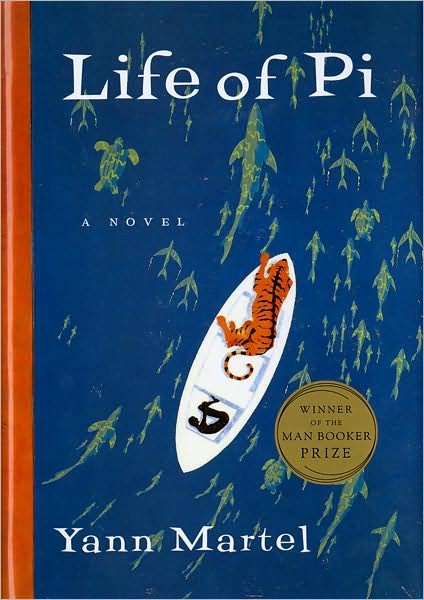
Reports the Criterion Current from the Guardian, "Ang Lee has confirmed that his next film will be an adaptation of Yann Martel's [Booker-Prize--winning] mammoth best-seller Life of Pi" (2002)! "[T]he fanciful tale of a young boy from Pondicherry, India, who survives shipwreck only to be stranded in a boat in the Pacific Ocean with a Bengal tiger as his companion; the novel has its exciting adaptation due in the next few years. Here's to anticipation!

Review: Where the Wild Things Are

Genre: Fairy Tale / Action-Adventure


I was one of the few, lucky enough to have seen this new film by rollicking director Spike Jonze in context with a former professor's subsequent panel on its inauguration into the canon of children's media. Though said panel itself did not provide too special or inspiring an interpretation of the film for me to use as a starting point, the audience of the panel did however have some interesting points that may find their way (in my modified versions of them) into this discussion.

Now, Where the Wild Things Are, as I'm sure we are all aware, is a new adaptation of Maurice Sendak's classic - albeit controversial - children's book of the same title. The book and the film both concentrate around their shared protagonist, the boy Max, who in his quest to express himself most ardently finds that such self-expression affects not only himself but also the others in the world around him. He learns this lesson - and, one could argue, several others - in the course of his metaphorical - or, at least, illusory - journey to a land where comparatively large and menacing creatures, known collectively as the Wild Things, reside in both peace and unrest. Purely hedonistic, id-driven beings, they match Max in their more specialized personalities exactly, and Max as their elected sovereign initially takes pleasure in finally being a member of a community that upholds the same degree of insouciant expressiveness that he himself daily espouses (much to the chagrin of his largely off-screen, off-stage mother). However, as he himself witnesses with a more clarified and less biased viewpoint the ramifications of such no-holds-barred behavior on both himself and his compatriots at arms, he comes to recognize - if not cogently and explicitly - the valor of emotional responsibility, intelligence, and understanding. Having learned such non-trivial matters, Max then departs the journey, he no longer having a need of it, and returns to his home life, where having learned such lessons he, we are to expect, will lead a more compassionately relative, emotionally mature life. Such, in a metaphorical nut-shell, is the plot.

However, in the case of the film, such fails to be the whole story. Though Mr. Jonze and his co-screen-writer David Eggers flesh out the didactic tribulations of Max's journey with the Wild Things to touch on a more expansive view of social interactions and personal expression, the ending result feels didactic in its presentation whereas its source material does not; and, while didacticism in and of itself is not necessarily negative, in this particular instance and this particular adaptation, where natural developments and an organic sense of streaming consciousness must flow and supersede imposed structure and lineaments, such moralizing is a weighty problem. In spite of its positive intentions and Mr. Jonze's directorial history as that of a man capable of producing work of the highest orderless order, Where the Wild Things Are ultimately unfortunately fails to be such an organic tale as it would want to, need to, and have to be in order to be reach its own best expression.

Perhaps this failure is a result of Mr. Jonze's rigid stricture to the elements and the concise nature of Mr. Sendak's plot, since the film shines best in its addended extended prologue and epilogue, in which Mr. Jonze introduces his audience to Max, Max's mother, and the rest of Max's emotional world in a way that is as concise, rigorous, and ready as it is organic, moving, and beautiful. Festooned by Mr. Jonze's signature phrases of unstilted realism and succinct emotional truth, this introduction and its parallel conclusion ring truer to the intangible values of their source material than the plodding, probing, and stilted body of the film ever does.

That body, in trying not to fall short of the high bar set by its bookending logs, ends up reading more like an effectively sold, intellectual's perspective on the memories of "childhood" (the theoretical concept) than like the naturally grown and harvested prints of childhood now (lived as itself). For never in the body of the film does the camera-work ever really seem sure of itself, as it does in the introductory and conclusory bookends of the film; unsure, it only vacillates nervously between an objective, structured eye (that exists in this film only because otherwise the eye doesn't quite know how best to grasp what it's actually seeing) and the subjective, unformalized window that the film really needs. Likewise, never in the body does the screenplay ever really unburden itself of the task of "trying to accomplish something," as it does in the bookends; burdened, it only stumbles where it shouldn't and fails to find the footing and the freedom necessary to foment the entropic revelry that its self-professed endgame needs its action to be. And ultimately, while the art direction on the island of the Wild Things does consistently look tasteful and appealing, those body-based sets' spare minimalism speaks more to the contemporary propensities of art today than the timeless realities of a child immemorial.

Yet, somehow I do not blame Mr. Jonze much at all for these missteps, even though he was technically at the film's helm. Though perhaps I may be excusing him nepotistically, I find his mark on the material in the film that did work and not on the material that did not - primarily because of the fact that those parts that he himself added to the story (i. e., the prologue and the epilogue) did still register so meritoriously in their qualities. His choices there and even beyond there inarguably become the glue that keeps his ship afloat. That the young Max Records gave what I think to be a tremendous leading performance, fully carrying the weight of the film, was with no doubt with thanks to Mr. Jonze's dedication to his craft; that Karen O. & the Kids' and Carter Burwell's scores integrated so well amidst the action of the film - supplementing and accentuating but never replacing that action - was with no doubt with thanks to Mr. Jonze's eye for the music in his imagery and not for the use of the music as a magnifier alone; and even that the costumes, which as large, rough, hairy, and decidedly awkward pieces of the actors' equipments one could expect might well weigh down on the necessary buoyancy of the film, instead appear utterly natural and naturally mobile in their filmic surroundings is with no doubt with as many thanks to Mr. Jonze's hand as to the costume-designer's.

Yet, beyond these redeeming features - pleasant though they may be - Mr. Jonze's film still suffers and shows signs of its suffering. It grows weary, wears on, and then eliminates itself with maudlin charm and affection that, though maybe touching, earn little reward for integrity, quality, and appropriateness to this dramatic material. Though I am sorry to have to say it, Where the Wild Things Are deserves no more from me here than a

Grade: B-: in majority a trendy dilettante's retelling of an enduring neoclassical fairy tale, a retelling that in minority nevertheless preserves important qualities of the original.

Review: Antichrist

I've taken some time, since I've seen the film, to fully digest Antichrist - or, if not fully, then at least better than may have some other reviewers who were quick with the instinctual exclamations but lacking of the intellectual fervor that this film, as all others, deserves. Mr. von Trier has clearly tried to take his film-making to a very personal place with this obviously purgative venture into ethereal imagery and caustic relationships. The protagonistic couple, played admirably for their endurance by Willem Dafoe and Charlotte Gainsbourg, rub up against one another and also against their inhabited world with increasing friction that eventually surpasses the stimulating and transgresses into the chagrinning, irritating, and ultimately burning acts of animate bodies in conflict. Against one another they rub and fight and contrive scenarios that, to the non-endemic eye, read like hallucinated vorteces of sadomasochistic indulgence and occultural pain but, to the endemic, feel like natural off-shoots of deep emotional seeds, as if thick and woody flowers were grown out, from within, and shaped in so doing by the pressurized nature of their containers. While such story-telling and investigation are of course powerful and indeed shocking at times, the ending effect is one that does include beauty before it leaps into arcane over-indulgence and morbid inevitabilities. Mr. Anthony Dod Mantle's refulgent cinematography, albeit hyper-stylized, rescues itself from the edge many times and in the end constructs a visual field that, though rapt and sometimes wreckless, finds sense in the hectic screenplay. By frequently literally slowing the action down to near clinical observations of scenes in progress - especially the film's prologue and epilogue - he trains his camera to slice and cleave an inlet for its viewers through which they may see, feel, and access the tightly wound, balled, and precarious knots of fervor and intimacy upon which the entirety of the action rests; and, though meagre, such an inlet is just enough for me to commend him for the achievement by listing him at right with those Under Consideration for the best of the year in their respective film-making categories. I include there also Ms. Gainsbourg and Mr. Dafoe, who though not especially strong nevertheless admirably somehow resist complete over-indulgence and wrecklessness in their performances as well, firming up the heart of the piece that, though anomalously conformed, beats still. However, I do not include any other creator of the film, including Mr. von Trier himself, whose work though intriguing here I think leaves too much heart - and not quite enough head - on the table.

Grade: B: Saved by its tempering hands, this film risks tipping itself out of its whirl with too daring a proclivity to do so for me to call it any more or any less.

29 October 2009

Screening: Wings of Desire (1987) at the Harvard Film Archive

For all of you near Cambridge, MA, mid-{next month}, the Harvard Film Archive will be hosting a screening of The Criterion Collection's other Blu-Ray release of next week: Collection #490, Wim Wender's Wings of Desire (1987). Tickets for this screening, set for 18 November at 7pm at the theater within the Carpenter Center for the Visual Arts at the University, may not be purchased as they are free! So, attend attend attend. I will.

28 October 2009

Essay: Howards End (1992)

Kenneth Turan, film critic for The Los Angeles Times, pens for the Criterion Current a snappy short-essay on the virtues of the glorious Howards End (1992), a film that ranks not only as one of my favorite and considered-best films of all time but also as next week's and November's first Criterion Blu-Ray release: Collection #488. I am on tiptoe with eagerness and anticipation!

27 October 2009

Trailer: Invictus

I was halfway through the trailer for Clint Eastwood's upcoming spawn when the boom of his loathable filmic mark was levied upon me; for, until that halfway point I had been laboring my conscious under the misapprehension that for once in a great long while Mr. Eastwood would and could deliver to the American public (and indeed the world public all over) a film that spake toward serious issues and of great minds without needing a dismissive, bastardizing, and altogether mawkish plot-device to make its wheel turn. As you may see in the half of the trailer that followed that intermediary mark, my disillusionment, realized by the fact of Mr. Eastwood's casual displacement of the plight and the life of a figure like Nelson Mandela for the sake of embracing the chummy tropes of the game (i. e., here, rugby), was fated; as I see it now, there is little to nothing that that man, by others called director, can produce that is not in a serious and almost disgraceful way deleted by his unnecessary yet persistent clinging to feel-good scenarios and banal breaks for filmic fodder. While there can be no doubt in my mind that a role such as that of Nelson Mandela is one potentially historical-making for the likes of an actor Morgan Freeman, the filmic world in which that role and therefore that actor's performance of that role must both live nor too can be doubted as a handicap, rather than a vehicle, for those two otherwise already impressive and daunting feats. View the full trailer for Invictus here.