23 August 2012

Review: Hope Springs

Genre: Comedy (Romance)

I suppose that it should by now have become unsurprising, for all the fulsome praise heaped (mostly deservedly) onto Ms. Streep, that one's viewing of her latest released performance is a revelation for one's experience of acting in the cinema. For fear that I may indeed be simply another film enthusiast enthralled by her, I shall sidestep my own praise here, except to say that how she festoons each second of her time on screen with microëxpressions that are thorough and honest extrusions of the character's self into the world is nothing less than masterful.
No, rather than continue with this line, I shall address how skilled also was the director's, David Frankel's, work in establishing and pacing this small intimate romantic comedy. After The Devil Wears Prada (2006) - wow, can Meryl act under him! - and a handful of other effective but inelegant pieces, Hope Springs is a relative revelation for his oeuvre too. It is immensely clear that, given the boon of Ms. Taylor's (not diminutively) adorable screenplay, he made the right choices, keeping a drum-tight and attractive narrative through his use of his actors and their sets.
However, the film does suffer from a poor sense of the camera's proper relationship to the action. Shots are frequently too close to the actors or, otherwise, too inopportunely placed, to give the sense of lacking connection or otherwise the sense of inspiration that the dynamics of the filmic storytelling could have really used. In one late scene, Ms. Streep's character Kay weeps alone at night in her bed yet the solitary expanse of her dark bedroom, looming emptily around her, was bereft from the narrative for the cinematographer's poor choice to stay almost exclusively with the bust-portrai range of imaging.
Nevertheless, this film is a true Summer soufflé: effervescent, savory, and seriously light. After past disappointments by Ms. Streep's Summer films (cf., Mamma Mia!, 2008), I was thrilled to enjoy and mainly admire the work done here this year.

Grade: A-/B+

21 August 2012

Article: "Weekend: The Space Between Two People"

Dennis Lim writes succinctly yet eloquently at the Criterion Current about Andrew Haigh's newly into-the-Collection inducted Weekend, the film that in my opinion was the best written, best supported (see actor Chris New as Glen in the image at right/above), and best overall new work last year. A choice excerpt follows below:

Character-driven dramas are not supposed to make a show of backstory, but in the genre of the blossoming romance—focused on two people for whom the rest of the world has fallen away, and who are hungry to know everything about each other—there is nothing more natural than exposition. Much of Weekend is devoted to defining these characters—or rather to watching how they define themselves—in streams of free-flowing but perfectly calibrated talk, and in a few candid, tender sex scenes.
A gifted writer with an ear for naturalistic dialogue and a shrewd sense of structure, Haigh embeds several discoveries along the way—most crucially, the catch that defines the film’s time frame and immediately lends its meandering conversations a heightened urgency: Glen is leaving for the States on Sunday for a two-year art program. [...] But it’s a testament to Haigh’s skill and maturity that Weekend doesn’t hinge on simple plot points, on will-they-won’t-they suspense, or on a late twist that reveals an unexpected connection between the protagonists. What truly matters here is the vivid sense of two young men going about thoroughly ordinary lives, neither fully satisfied nor exactly depressed (“Are you happy?” Glen asks Russell; “I’m fine,” he responds), engaged in the day-to-day drama of figuring out who they are, in public and in private. (Lim, 2012, http://www.criterion.com/current/posts/2426-weekend-the-space-between-two-people)

21 July 2012

Review: The Dark Knight Rises

Genre: Action (Superhero) / Drama

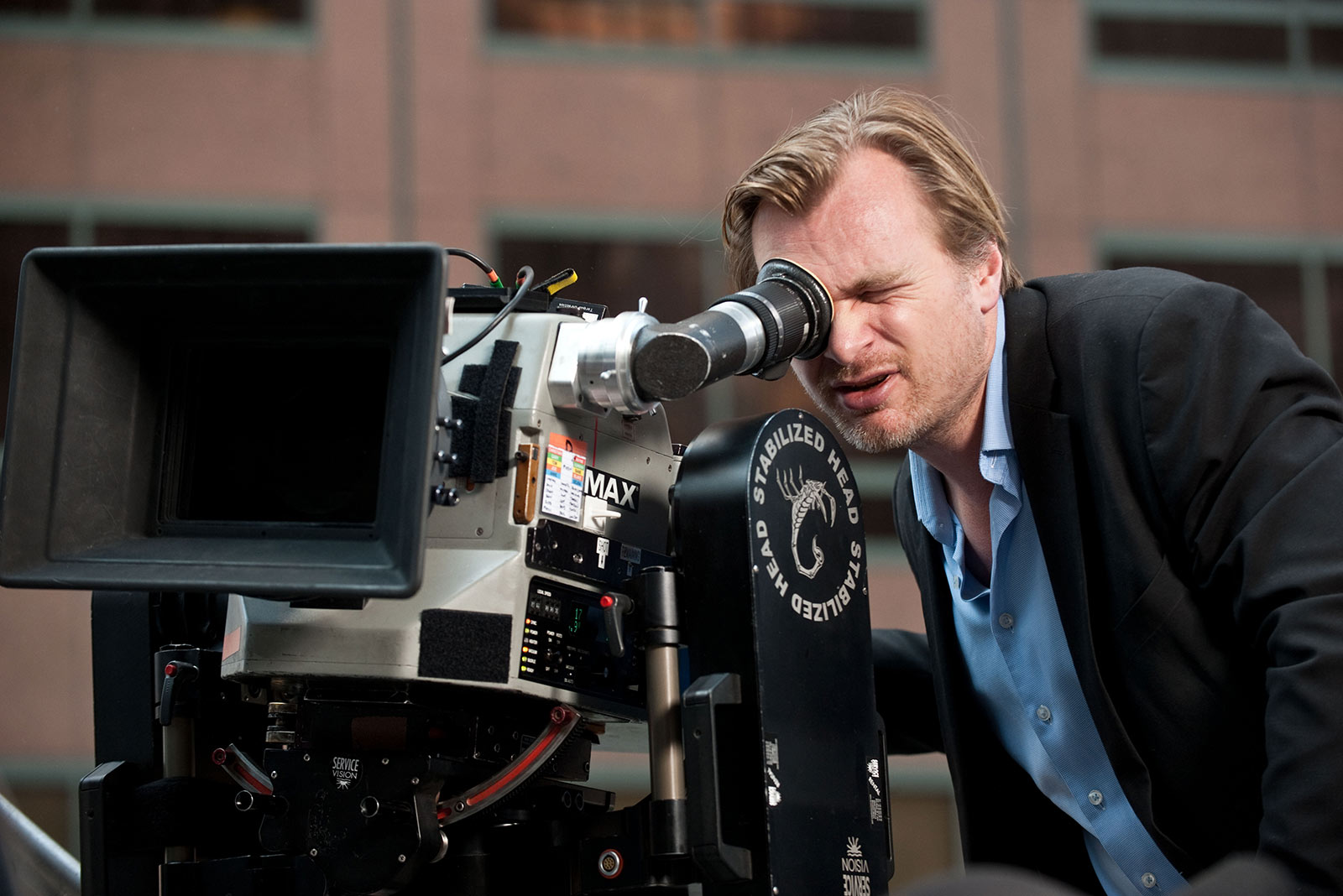
Having completed his trilogy on the legend Batman, Mr. Nolan must feel a great deal of relief. Undertakings of massive projects, especially those concentrated around characters whom the viewing public already hold quite dear - especially in certain circles - are thoroughly trying; and to have accomplished one is gratifying, especially when it largely hits the mark. From Batman Begins (2005) through The Dark Knight (2008) to his current film, The Dark Knight Rises, Mr. Nolan as helmsman has kept his vessel remarkably upright for nearly its entire journey and has succeeded ultimately in arriving her at the destination: completion. Of course, loose ends have been strewn and frayed here and there; swapped actresses in a famously from-female desensitized world, a sometimes overbearingly sentimental servant, and the ceaseless allure of wryness have be never been the films' iron and steel. Yet this series could sail and has sailed leagues and leagues beyond any other "superhero" series, because of the able hands on deck. Never forgetting the actors (viz., Mr. Ledger, Mr. Freeman, Mr. Oldman, Mr. Gordon-Levitt who beautifully delivers a monologue here, and Ms. Hathaway who defies expectations and delivers the best developed and portrayed female character in this series) but nevertheless putting their handiworks aside now, I admire the accomplishers for the feat: Mr. Pfister again gives us earnest imagery; Mr. Zimmer, reliant chords; Mr. Nolan, the sight and sound of tension; he and his brother Jonathan, the medium through which to perceive it (at best here of all the films, I think); Ms. Hemming, the trappings of perception's realism (also at best here, I think); and Mr. Lee, the panorama. Though I make sure to say that wherever not explicitly already noted these people's efforts fell short of truly wowing me, I respect the work. The Dark Knight Rises makes that positive end, that highest note, that I hoped for four years ago (to the day[!]; see my review of The Dark Knight here); and I'm pleased to say that I enjoyed it.

Grade: B+

19 July 2012

05 July 2012

Review: Magic Mike

Genre: Drama

After last year's Contagion and Haywire, both films bearing his storytelling mark of blocked tableaux in series, Steven Soderbergh stepped away from the sparking networks of characters that dramatize the dynamics of ensemble players' interactions and toward the intimate drama, told almost entirely in the first-person, that may stand as a latter companion-piece to his (2000) Erin Brockovich. Also a singular story pulled from a real life and repainted for the merit of its protagonist actor, this year's Magic Mike is a show.
Historically, it follows and invokes the plot points, characterizations, and narrations of previous dramas like P. T. Anderson's (1997) wonderful Boogie Nights, J. L. Mankiewicz's (1950) classic All about Eve, and even N. W. Refn's (2011) recent Drive. However, artistically, this show doesn't achieve the winding confidence of Boogie Nights, the stylish vitriol of All about Eve, or the insistent visual passion of Drive. Somehow this show's protagonist even lacks the swagger of that of Erin Brockovich.
Indeed, while Magic Mike and its lead Channing Tatum are entertainments of entertainment - buffed, lined, and plated - they fail to hit their marks too often - even for Mr. Soderbergh's generously to-realism tipped hand. Too many imperfections were chosen, too little depth was explored, and too early was the narrative closed for me to appreciate much more than Mr. McConaughey's (surprisingly) coherent and complex performance and a group of fleeting yet incredibly perfect shots (cramming hard directed material into orthogonal and non-accommodating space). The sparse and continuous story of the screenplay was simply inappropriate starting material for the serial storytelling style of the director, and trying to eke out fealty to reality from the resultant admixture filmed distracting layers on top of the action, where there should have been informative layers beneath.
Who is Magic Mike? A stunted dreamer with an artist's soul, who uses the power of seduction for self-compensation even when the world appears to be refusing to compensate him itself for his clearly unique talents? Trustworthy classmate, putting out into the world what he really hopes to receive from it? Smarmy compliment extractor from the cogs outside his wheelhouse and greaser of the ties inside it? Certainly no "yes or no" question should be able to capture the fullness of the protagonist, yet also certainly no scene should be without capturing that fullness, especially no scene of the first-person. If Magic Mike is meant to be read as an autobiographical reflection by its title character - character, not actor - then the sallow tinge, the stuttered presentation, and the few smooth montages of dancing are valid markers of psychological realism in the film making. However, these markers' ultimate impotence to bear out their intents and explain where words and even more replete memories could not wastes a majority of their presences in the work as a whole.
Further tainted by the practically intrusive cinematic displays of the background into the foreground - either further revealing of the shallow depths of the story or artificially punning on the thrust-y artistry of strippers - the work unfortunately speaks more than just at times like a post-reality-entertainment American's attempt at personalizing superflat before audiences who would "come for the sex but leave with the story." As a vehicle for Mr. Tatum's increasingly omnipresent (see the two other films in which he's played lead already this year) success, Magic Mike is itself successful. Yet, the type of success for which I think that this film was really aiming is still somewhere in the other direction.

Grade: C

20 June 2012

Trailer: Anna Karenina

This film looks like a shoe-in for Costume Design at the Academy Awards.

10 June 2012

Review: Prometheus

Genre: Sci-Fi

Director Ridley Scott relies heavily on the excellence of his camera, guided by Dariusz Wolski, for repairing plot divots in an otherwise interesting visual narrative, parcel to his legacy work Alien (1979). That the Prometheus screenplay is puckered and punctured, hobbling at times over far too annunciative lines, suggests creative contention where the accompanying imagery suggests artistry. That screenwriter Damon Lindelof claims the television series Lost as his biggest past credit may well explain the shoddy conversations, hyper-religiosity, and superfice to invention that all characterize the worst of the film. Yet - fortunately for it - its medium prizes sight over sound, picture over dialogue; the best of the film - especially its introduction - articulate the nuances of the story in far more concise, revealing, and poignant phrases than anything a writer like Mr. Lindelof seems capable of committing. One could only hope from such a promising beginning would follow a strong end, bolstered by impressive effects rather than verily redeemed by them. Still, that the film achieves a coherence among its parts and delivers a representation of a world believably troubled by its inhabitants, probing for a means of escape, is laudable for manifesting the sentiment of the original work, inducing vice into ostensibly virtuous pursuits and enterprise into science. If the depth so carefully provided for three-dimensional viewing had only been commuted into the characters' interactions, Prometheus could have escaped from its "standard Summer fare" slate and really made a comment on the legacy that its director began, in address of power, personhood, and ethicality. Unfortunately for this viewer, blunt acknowledgement would have to suffice.

Grade: B-.