 Disney's latest distribution from Japan's Studio Ghibli, Ponyo (formerly Ponyo on the Cliff by the Sea), has now officially a release date (i. e., 14 August 2009) and a trailer, which follows this link right here. Yay, Miyazaki!
09 July 2009
Trailer: Ponyo


Companion Piece: Brief Encounter (1945)
A Mr. Dave Blakeslee, who runs the blog Criterion Reflections that features his own personal and regularly intervalled ruminations on the films in The Criterion Collection, provides in a recent post an interesting delving into the heart of one of my favorite films in the Collection: 1945's Brief Encounter, directed by David Lean. Though this delving may not be particularly attuned to the specifically complex intricacies that the film may have to offer as a work in isolation, it does give a good sense of an overall appreciation for the connections within the work itself as well as of the work with its historical context. With such a framework of basic ideas and contextual explanations, the review succeeds where it provides a medium of contact for those present-day viewers of the film, who otherwise may have found the reticence, the taciturn physical intimacy, and the oblique parting of ways a passive nightmare, lifelessly stiff and unmoving, rather than the pulsing and gripping flight of fantasy that they ought to be found and - in my opinion as well as Mr Blakeslee's - quite well are. Observe the clip that he has included (and that I have reposted here, above) to be sure yourself. Happy viewing, all!
05 July 2009
Rumination: On Vampires
The Times has a rolling, (somewhat flippantly) meditative article up now about the recent pop-cultural trend toward reawakening the vampire(s). This article's authoress, Ruth La Ferla (i. e., a woman more prominently consulted for her views on fashion and on fashion-related aesthetics than for her views on fictional villains or traditional cultural metaphors [i. e., fairy-tale monsters, if you will]) meddles at length with the idea that this newly rejuvenated adversion to the vampire(s) is due to the similarly "new" way in which they are being appraised, used, and appreciated for their usefulness by the contemporary masses: namely, vicariously escapistically - a theory that is perhaps as old as the myth of the vampire itself. Though, true, Ms. La Ferla does reach back into the canon to pull a Catherine-Deneuve film from the early 80s and then literature from the century before that, the authoress does hardly justice to the fact that the culture that bore the myth was in many ways parallel to the new constellations of temperament that describe the Zeitgeist of our present own. Included therein are her suppositions like threats of contaminancy, flirtations and longed-for dalliances with danger, and yes - indeed - sexuality. The plague-ridden populations of 18th-century Eastern Europe, who never ventured far in mind or body from the path lit by God (lest he too plague them) in general, conflated all three items into one and anthropomorphized it as vampire, a hellish creature - antithetical to God - that with the insatiable appetite for risk and relations could strike them all dead if they were not careful to stay the literally lighted path. Today, a similar climate, fueled by overestimations near-terroristic of epidemics (like swine flu), by latent worries about consanguinous perils like HIV (especially in the intravenous drug trade), and by the increasingly abundant presence of homosexuality in the forefront of the Zeitgeist and in the media (e. g., Prop. 8, "Don't Ask; Don't Tell" policy), amounts to a situation facilely effigied as that creature of the past, whose origins and intentions unknown mix at the border of pleasure and pain in the bodies and minds of the people in our collective consciousness - and, of course, the reeffectualized creature bears the change in specifics in his face as well. This change, Ms. La Ferla, a change spurred on by the upward fixations of equal beauty, is what much more probably has caused the vampire to change his guise as you say he so has, from the haggard, scraggly, pointy, and leathery lechers of the nights of old (i. e., figures who bore in their very minutest details the imprints of their origins in the plagues and associated subconscious unrests of their time, like fingerprints) to the sleek, glowing, sharp, and leather-clad seductors of the twilight - if you'll pardon the silly reference - (i. e., who bear too the marks of their makers, the hands of the outcasted fringe-members of society, of the much drug-associated gaunts of the mid-'90s grunge aesthetic, and of the toned and pretty golden-boys of gay culture's often hypersexual fantasies). Have your pick of the stars from Twilight (2008), Låt den Ratte Kömma In (2008), HBO's True Blood(!), Queen of the Damned (2002), and even 1994's Interview with the Vampire (starring Brad Pitt and Tom Cruise) and surfeit yourself on evidence to show how this claim of mine is in fact the case. To deny so would be to ignore those films entirely. Now, of course, this claim is not to the exclusion of all other possibilities (e. g., Ms. La Ferla's quoted quip that the vampires of today's media are more like James Dean than Bela Lugosi), but rather - importantly - that, if one wishes to diagnose the attitude of the culture by backwards appeal to the vampiric trends of late, one must consider the aforementioned confluence of factors, parallel to those of the similar trends original, as the primary - if not outright preponderant - explanations. For that reason it is likely, I suspect, that the vampires that we know weekly these days will linger around just long enough in the forefront of the collective consciousness of our people, for them (i. e., the vampires) to sway and be swayed toward a resolution of at least the weighted majority of the issues that caused the creatures to once again spring up culturally. However, it must simultaneously be true that some essences from their newly influenced forms will be retained as their existence as a figment of the cultural imagination perpetuates their myth, that will not leave us (especially not for our undying fascination with its sexual appeal), for generations, periods, and social climates much yet still to come.
Type rest of the post here

25 June 2009
Announcement: The Academy of Motion Picture Arts & Sciences to Nominate 10 Films for "Best Picture" This Year in Film
Also via Awards Daily, yesterday I learned of the following dramatic shift away from tradition regarding the "premier award given for filmic achievement today": 10 is now the number of works to be nominated by the Academy of Motion Picture Arts & Sciences (AMPAS) for its Best-Picture Academy Award this upcoming January - and all Januaries in the foreseeable future. Whoa! Granted that this shift does leave an incredibly enhanced opportunity for good films to boost their historical reputations by earning such a nomination from the Academy - and Awards Daily has compiled a list of some films that may have been worthy of doing just that in the recent years gone by (a list viewable here) - the shift invariably alters the chemistry of the awards, in that it may be now that all other awards (particularly the acting and directing awards) will come eventually to take center stage as the more rarified, thus more coveted, and double-thus more esteemed prizes to be won in the industry. Such an effective dilution of the "top prize," furthermore, would mean that, while the competition could be more open, the competition could be less "best:" See the Golden Globes' similarly extended list of nominees for Best Picture every year. Admittedly, we should not get ahead of ourselves in such kinds of prejudgement here, but these aforementioned are things to be considered and to be suspected as the days roll on, closer to the January date and afterward. In any case, we could stand to see a film like Away We Go hit the list this year in film. Now wouldn't that be something?
Trailer: The Box
Wow, look at Cameron Díaz, being all actress-y and acting and stuff; she must be like so committed now. Ha: Seriously though, Ms. Díaz is being featured as a near-leading performer in two films this year that look actually not like C-level, romantic-comedy, haphazard jaunts into vapor but rather like on-the-cusp, potentially B+-or-better films - and I like it. Via Awards Daily, check her out in the trailer (below) for the latter of the two films (i. e., director's, Richard Kelly's, upcoming film The Box). (For the former, see here.)
18 June 2009
Theater Review: August: Osage County

See Whoopi Goldberg summarize the play, along with its fellow competitors for the Best-Play--Tony-Award, during this clip from the 2008 telecast of the 62nd Annual Tony Awards.
Article: "The Seventh Seal: There Go the Clowns"
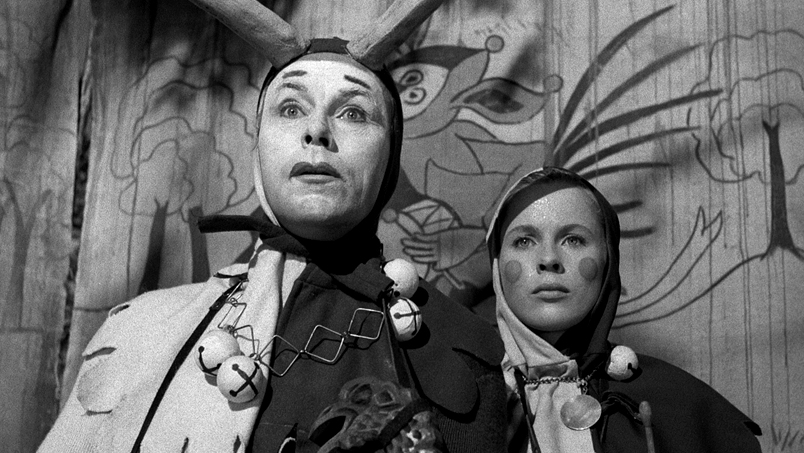 Here is what I found to be a great short article, reëmphasizing the historical context and the artistic merits of Ingmar Bergman's The Seventh Seal over the film's more popular honor of historical stature and intellectual toughness. For any of you who may be looking to (re)acquaint yourself with the film, it was just recently released in a beautiful Blu-Ray edition by The Criterion Collection. Cheers!
16 June 2009
Review: Away We Go

Sam Mendes' latest family drama, Away We Go starring John Krasinski (most popular by means of The Office) and Maya Rudolph (most popular by means of Saturday NIght Live), is admittedly a turn from his previous works of the same category for its own sharp curves into blithe humor - an earnest panache that was notably absent from the more sardonically humorous American Beauty (1999) and the decidedly anhumorous Revolutionary Road (2008). The film in this way makes for a terrific summer movie, as much as perhaps Sideways (2004) did, with its counterbalanced levity and gravity, which in Away We Go teeters on a peak of marital and (more specifically) (pre-)parental distress. While this subject matter itself is not unusual, the fact that Mr. Mendes allows himself to slip away from a hardcore inspection of human interdynamics and into a more freestyle exploration of societal coupledom is what achieves for this film significance. It's as if the director "rerecognized" that distressing foibles and antipathic character sets can be comical on top of acute and amusing (as in a "Kids-Say-the-Darnedest-Things" kind of way) on top of argumentative.
And the cast couldn't have been better at realizing that simultaneous union of qualities in the film's screenplay. Though most of the better known actors (than at least the leads are known) in the film have parts that amount to no more than double-sized cameos, they bring a spice and a flavor to the methodical nomadism of the theory behind the film that would have been absent in a much more serious-minded manifestation of the story. Catherine O'Hara shines as an officiously secretive a-parent to Mr. Krasinksi's character, Allison Janney pops and fizzles as a zesty slice of post-modern fortitude and applied laissez-faire, and Maggie Gyllenhaal is simply a gift as a new New-Wave nurturer, painfully aware of all but herself. As a quintet along with the not unworthy turn of Melanie Lynskey as a somehow refreshingly stock "desperate housewife" and the notably present absence of a fifth woman in the home of Mr. Krasinski's fictional brother, the women link and bind the arc of the film as, indeed, a trip to the hot-spots of theoretical womanhood for women currently in their 30s-60s and as, also, a meditation on paths to be chosen or not chosen for an individual tethered to another or so untethered. As our female protagonist, Ms. Rudolph parades her dramatically overly enceinte self through these hotspots and path-starts as if they were exhibits for a woman who perhaps wisely, perhaps unwisely, has decided to delay her moment of decision and bear the full load out in rhetorical observation. She as such a symbol does well to represent the outlook of all younger women - younger not physically but emotionally and psychically - who may once again see their future, with past abolished, as potentially still the world of mysterious yet exciting possibility that they had once envisioned as a full spectrum when they were children but that they have since recidivized into only a few, blocky, extremed items while (they are) at large within society. They, in short, are those who can choose not for a movement or for faux liberation but honestly for themselves, whatever they desire may be.
And, in the end, though perhaps not as glamorous as those of some or as carefree as those of others, their lives are right for them - or at least they earnestly believe they are, which at the time is all that really matters.
Grade: B+, well done upholding the idea of true individualism, true choice, and true honesty about what matters most to one's own self.
10 June 2009
Trailers: Shutter Island and The Road
 Two new trailers, for what could be late-year heavy-hitters, were released today for Martin Scorcese's Shutter Island, starring Leonardo DiCaprio, Ben Kingsley, Patricia Clarkson, and Michelle Williams (among others), and The Road, starring Viggo Mortensen as Cormac McCarthy's peregrine protagonist. About the former I don't quite know how to feel, as my primary instincts tell me to shun the feature to the locked door of B-level spooks, but then second glances remind me that there are such a good cast and crew, that perhaps this one, despite first appearances, may be more than just Mr. Scorcese-does-kitschy-horror. About the latter I have every confidence, that it will be a strong piece and an ever stronger vehicle for performance by Mr. Mortensen, who seems to shine in dramatic patriarchal rôles such as his in this in-October-to-be-released piece.
A review for Away We Go is expected later this weekend.
05 June 2009
Winner: Howards End

Huzzah: The Criterion Collection's contest (see here) with Amazon, to determine the film that will become the film-house's next Blu-Ray release, has declared a winner and that winner is Howards End! Needless to say, that film, a beautiful portrait of a changing England, was my choice and I am so happy that it won. To have it on Blu-Ray would be fantastic, and I can't wait for the release, which will likely be later on this year. Until then, enjoy the scones and try not to steal the umbrellas!
Subscribe to:
Posts (Atom)

 Posts
Posts


